New concrete in Concord almost always cracks somewhere. That sounds like failure, but good crews plan for it. Control joints are the shallow cuts or tooled lines you see dividing a driveway or sidewalk into rectangles. They create a weakened plane on purpose, so shrinkage cracks form in a straight line inside the joint instead of wandering across the surface. The slab is poured in sections because concrete needs somewhere to move.
Season makes the joint story visible. Heat expands the slab, cold contracts it, and wet red clay swells while dry clay shrinks. Joints open and close a little through the year. Watching them through the seasons, and keeping them clean, is simple maintenance that protects the edges of each panel.
Why concrete shrinks and moves
Fresh concrete contains more water than the chemical curing process needs. As that extra water leaves, the slab shrinks slightly. At the same time, the surface dries faster than the interior, and temperature changes make the whole slab grow and shrink in small amounts. If the slab is restrained by friction with the base, by a garage floor, or by its own length, stress builds until a crack relieves it. A joint placed at the right spacing gives that stress a planned release point. Typical residential joint spacing is tied to slab thickness, often around eight to twelve feet for a four inch slab, with joints also placed where the slab changes direction or meets another structure.
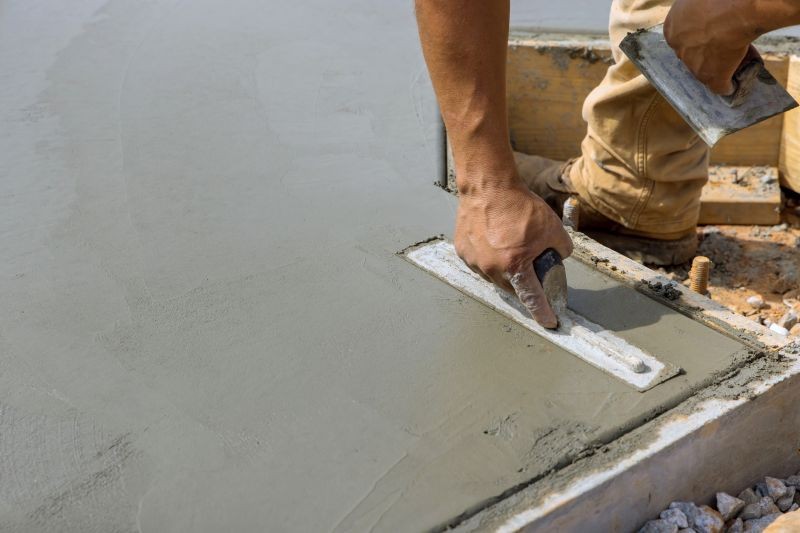
Where joints belong and what goes wrong without them
Joints belong at regular intervals, at inside corners, around posts and drains, and where a driveway meets a garage slab or a public sidewalk. Without them, cracks choose their own path, often diagonally across corners or in long wandering lines that are hard to seal and easy to trip over. Joints that are cut too late miss their chance, because the slab may crack in the first day. Joints cut too shallow do not create enough of a weakened plane. Depth matters: a saw cut is commonly at least one quarter of the slab thickness. Tooled joints in sidewalks do the same job during finishing, while the concrete is still fresh.
Seasonal control joint checklist
- Spring: clear winter grit and leaves out of joints so water drains instead of sitting.
- Spring: check joint sealant for gaps or peeling and note sections that need resealing.
- Summer: look for joints that have closed tight in heat or panels pushing at the garage.
- Summer: keep grass and weeds from rooting in open joints, which widens them over time.
- Fall: blow out joints before leaf season and confirm runoff still moves off the slab.
- Winter: avoid metal shovel edges catching on joint lips during the occasional ice or snow clearing.
- Year round: photograph any crack that leaves the joint line, since that signals movement worth watching.
Sealing joints and knowing when to call
Not every joint needs sealant. Driveway joints against a garage, or joints where water can run under the slab, benefit most from a flexible seal that keeps water and grit out while still allowing movement. Rigid filler in a working joint will crack out. Hairline cracks inside a joint line are the system working as designed. Cracks that step outside the joint, sections that lift at a joint, or edges that start to chip away under tires deserve a professional assessment from a crew such as Linker Concrete Finishing, Inc. In Concord, one hard winter or one washout under an edge can turn a tidy joint into a lip that catches every tire, so early attention is cheap insurance in effort, even though the joint itself looks small.
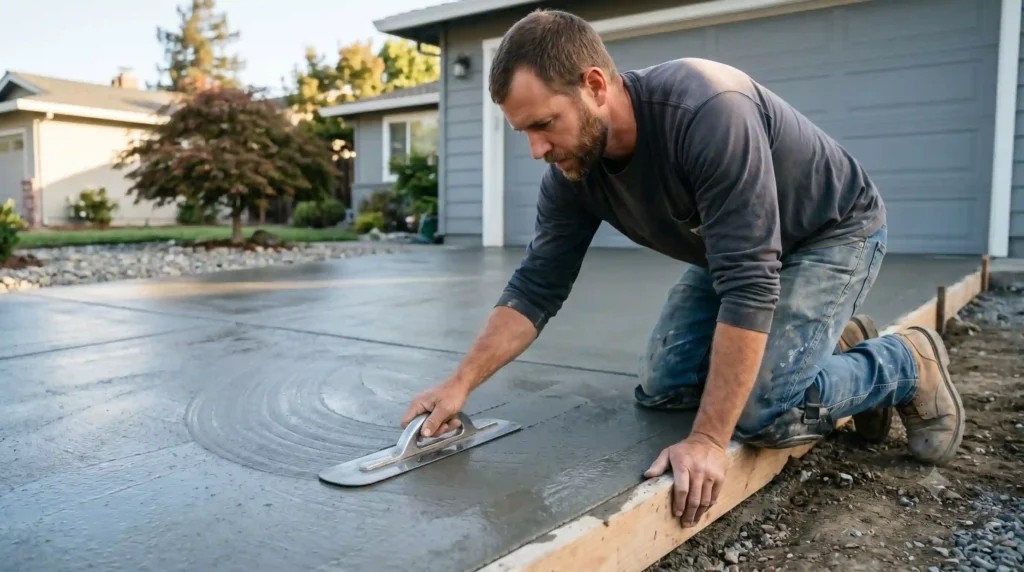
Expansion joints where slabs meet
Control joints within a slab are related to, but different from, expansion joints where two slabs meet, such as a driveway against a garage floor. Those meeting points often use a compressible filler so each slab can move without pushing the other. In summer heat, a driveway that expands against a garage without room to move can lift or crack at the junction. In winter, the same gap opens and collects grit. Check that junction twice a year. If the filler has sunk, rotted, or disappeared, replacing it is small work that keeps water and incompressible grit out of a joint that needs to stay flexible through every season.
Common questions
Are cracks in the joints a defect?
Usually not. A crack that forms inside a control joint is the joint doing its job, giving shrinkage a straight, planned place to happen.
How far apart should control joints be?
Spacing depends on slab thickness and layout, with many four inch residential slabs jointed every eight to twelve feet. Corners, transitions, and narrow sections need joints of their own.
Should I seal every joint?
No. Seal where water can get under the slab or against a building, and use a flexible product made for moving joints. Open joints in the middle of a driveway are often left unsealed and simply kept clean.
Photos in this guide are representative stock images.
← All guides from Linker Concrete Finishing, Inc.← Back to Linker Concrete Finishing, Inc.