A pool deck in Concord has three jobs at once. It has to stay bearable under bare feet in July, give enough grip when it is wet, and move water away from the pool and the house. A patio without a pool shares the heat and drainage questions, but the slip question becomes sharper around water. Choosing a surface is mostly about balancing those three jobs for how your family actually uses the space.
There is no single best finish. Dark, smooth concrete looks clean in April and punishes feet in August. A rough surface grips well and can feel harsh if you sit or kneel on it. A coating can cool the surface and add texture, but it needs the slab underneath to be sound. Start with use, then pick the finish.
Heat: why color and texture change the afternoon
Sun heats a slab all day, and light colors reflect more of that heat than dark colors. In full Piedmont sun, a dark broom finish can get hot enough to shorten how long kids stay on it without sandals. Textured overlay coatings sold for pool decks are designed to stay cooler than plain concrete and to add a fine grip pattern. They are not magic. A shaded deck, a lighter color, and a surface that does not store as much heat will still outperform a dark deck in direct sun. If part of your patio sits under trees and part sits open, expect the open part to set the comfort limit on the hottest days.
Slip: grip when wet is the real test
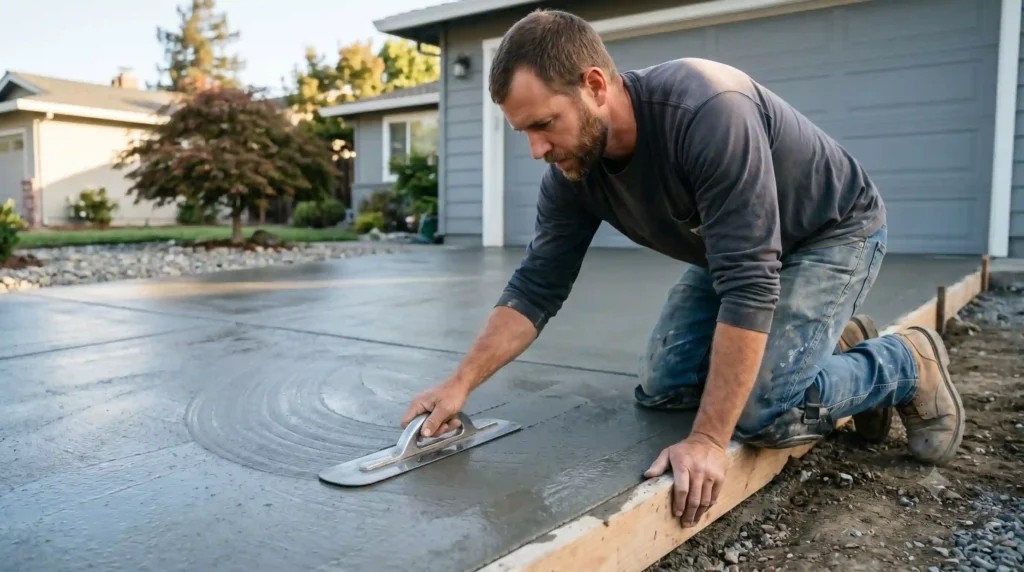
Dry concrete rarely feels slippery. Wet concrete with sunscreen, pool water, and smooth finishing can. A broom finish leaves fine lines that help shoes and feet grip. A hard troweled finish, the kind used inside garages, is smoother and is a poor choice by a pool. Overlays and exposed aggregate add texture in different ways. Test any sample wet if you can, and think about who uses the deck: small children running, older relatives walking carefully, and guests in smooth soled sandals all need more margin than an adult in sneakers.
| Surface option | Heat under bare feet | Wet grip | Best fit |
|---|---|---|---|
| Light broom-finished concrete | Moderate | Good | General patios and straightforward pool decks |
| Textured deck coating over sound concrete | Lower | Good to very good | Existing decks that are structurally sound but hot or smooth |
| Exposed aggregate | Moderate to high | Very good | Owners who like a stone look and want strong texture |
| Smooth troweled concrete | Moderate | Poor when wet | Covered areas away from pools, not open pool decks |
| Pavers over a proper base | Varies by color | Good | Patios where individual units can be lifted for repairs |
Drainage: slope you cannot see but will notice
Outdoor slabs should slope gently away from the house and, around a pool, away from the water in most layouts so dirty runoff does not wash into the pool. A common target is about a quarter inch of fall per foot near buildings, easing to a gentler slope farther out. Too flat and puddles sit, stain, and grow slick. Too steep and chairs wobble and water rushes. Drainage also depends on what happens at the edge. A deck that sheds water into a planting bed on red clay can turn that bed into a swamp, while a deck tied into a drain can handle summer thunderstorms without flooding the patio door track.
Making the call for your yard
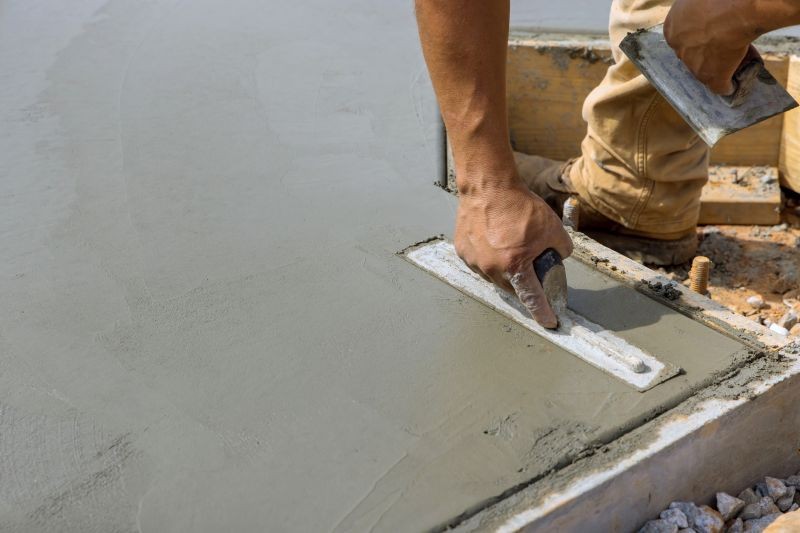
Work through the decision in order. First, is the existing slab sound, level, and draining correctly? If not, a coating will not rescue it, and replacement or repair comes first with a crew such as Linker Concrete Finishing, Inc. Second, how much direct sun does the deck get between noon and five? Full sun pushes you toward lighter colors and cooler coatings. Third, who is barefoot there most often? That answer sets how much texture you need. Finally, check the drainage path in a real rain before you commit to a finish. Watching one Concord thunderstorm run off your current patio tells you more than any sample board.
Common questions
Can a coating fix a cracked pool deck?
A coating can improve heat and grip on a sound slab, but it will not stop active cracking or settlement. Cracks that keep opening or sections that sit at different heights need repair or replacement first.
How much slope should a patio have?
Enough to move water away from the house without feeling steep underfoot, often around a quarter inch per foot close to the building. The exact slope depends on the layout and where the water goes next.
What finish is safest around a pool?
A textured finish with proven wet grip, such as broom finished concrete or a textured deck coating, is safer than a smooth troweled surface. Color choice matters too, because a deck too hot to stand on gets rushed across.
Photos in this guide are representative stock images.
← All guides from Linker Concrete Finishing, Inc.← Back to Linker Concrete Finishing, Inc.